
Trevor Nelson and DJ Spoony
The legendary N16 DJs talk about the legacy of Black British music and the clubs that started it all
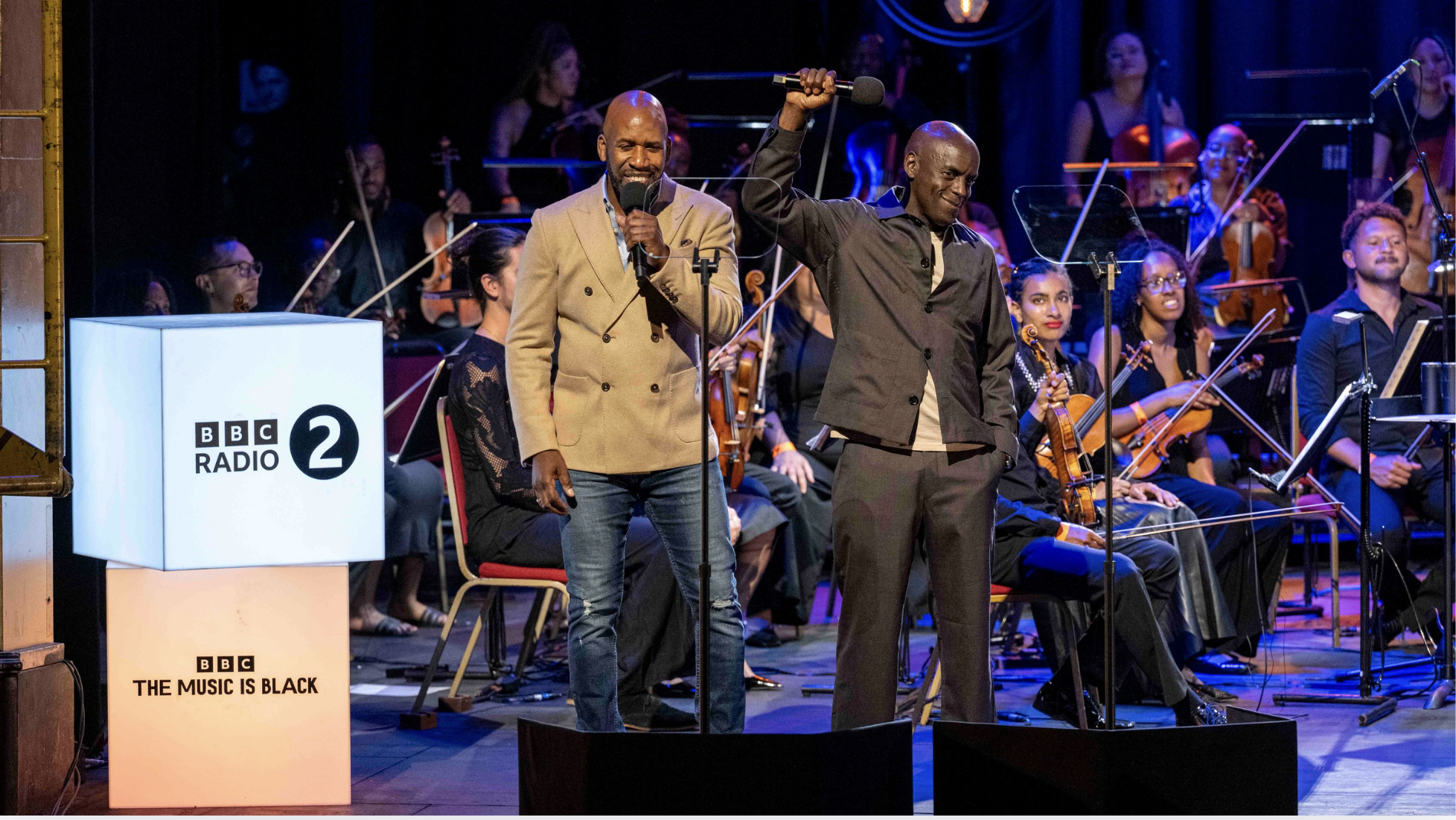
DJ Spoony and Trevor Nelson hosted the Music is Black Live show at Hackney Empire in conjunction with the V&A East exhibition. Photo: James Watkins/BBC
Few people have done more to champion Black British music than Hackney-born broadcasters Trevor Nelson MBE and DJ Spoony.
Between them they’ve spent decades shaping the UK’s music scene, from pirate radio and club culture to national broadcasting.
Trevor remains one of the country’s most influential champions of R&B and soul, while Spoony is widely regarded as one of the pioneers who helped take UK garage from the underground to the mainstream.
Spoony is currently covering Trevor’s popular weekday afternoon show on BBC Radio 2, while his friend and colleague takes time off the show for health reasons.
Love Hackney caught up with the N16 legends at the ‘Music is Black Live Show’ at Hackney Empire in May.
Trevor and Spoony – whose real name is Johnathan Joseph – reflected on the growing recognition of Black British music, the importance of the new V&A East exhibition, and the east London venues that helped launch their careers.
He says: “The music’s always been here. We’ve always been here. It’s just that now we’re creeping into positions where we can do something to document the history of Black music or culture in general.”
Both praised the V&A East museum’s exhibition curator Jacqueline Springer, who they say brought genuine lived experience to the popular, inaugural exhibition, The Music is Black: A British Story.

‘A Place Beyond’ by Thomas J Price outside of V&A East Museum. Photo: David Parry
Spoony, who helped curate the UK garage section in the exhibition, believes the genre’s influence is often underestimated.
He says: “UK garage as a genre is often overlooked but played such a massive part in Black British music.
“The fact that it went from underground to overground and is still here 25 or 30 years later shows how interwoven it is into the fabric of culture here in the UK.”
The conversation soon turned to Hackney and east London’s role in shaping British music culture.
While neither was keen to claim ownership of genres, both agreed the area was a breeding ground for creativity.
“Our scene was really strong,” says Trevor. “Club scene, music scene, soundsystem scene. It seemed to be the place where the collaborations happened.”
Spoony added that while grime undoubtedly emerged from east London, the wider story of Black British music belongs to communities across the country.
He says: “UK garage would not have been UK if it wasn’t for all of those other places outside of London.”

Courtney Pine, Rhoda Dakar, DJ Spoony, Omar, Trevor Nelson, Alison Limerick. Photo: James Watkins/BBC
The pair also shared fond memories of the venues that gave them their first opportunities behind the decks. Trevor recalls promoting a night at Dougie’s near Clapton Roundabout. He says: “I got about 30 people turned up. Twenty-seven on the guest list. Three people paid.”
But even then, he was already thinking long term. “Three people paid. Next time, four people will pay.”
For Spoony, one of his first breaks came after entering a DJ competition at Oasis in Dalston Junction. “Something went wrong technically, so he let us both DJ,” he laughs.
The pair also reminisced about Maxims near the Rio Cinema and the network of clubs, record shops and community venues that once formed the heartbeat of Hackney’s nightlife.
One thing they both agreed on was that success was never the goal in those early days.
“It was never a thing of, ‘I’m going to be a DJ,’” says Spoony. “For us, it was just all about the party.”
Looking back on careers that have taken them from local clubs to national radio and television, both remain proud of their Hackney roots and the community that shaped them.