
Margs
Hackney’s Margs explains why he supports young people – and what he’s planning on next
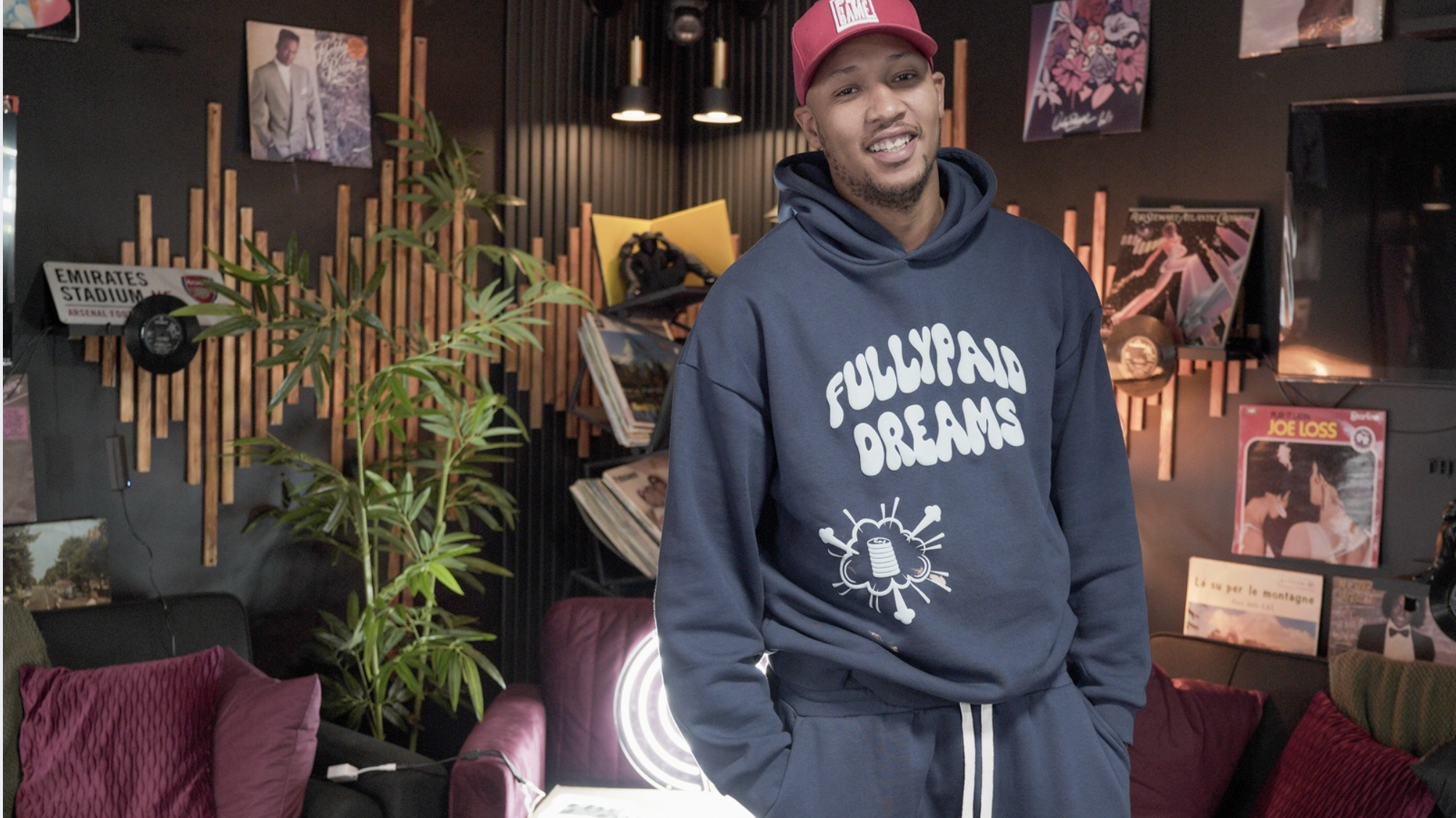
Margs at his studio
For Margs, real name Andre Wright, London Fields wasn’t always the polished postcode it is today.
“The reputation is super trendy now – but that wasn’t the case back in the day,” he says. “It was more like, ‘oh you live in London Fields? No, we’re not going there, we’re not getting off at that stop.’”
As a kid growing up on an estate, he described his life as ‘normal’ – water fights, playing football and cricket – as well as scratching off the ‘no’ and the ‘b’ on the famous no ball games sign.
When he was doing his GCSEs, tragedy struck. His brother Corey was killed outside Chimes nightclub in Lower Clapton. His murder has never been solved, but was believed to have been gang-related.
At 15, Margs had already seen too much. He recalls: “I just thought that was life. After that happened I got more involved in the streets.
“Violence, drugs – all that kind of stuff. I didn’t care, I didn’t have any goals. I thought if it’s good enough for my brother, it’s good enough for me.”
Needless to say, he was well-known in the area, and it wasn’t long before he started gaining attention for his music too.
Margs was one of the founding members of Mashtown, the Hackney collective that helped define London’s early road rap sound. But back then it didn’t pay the bills. He says: “When my music was blowing up, I was knee deep in the streets. The industry was different.”
That lifestyle eventually caught up with him and, after getting shot, everything shifted. “I was at a crossroads. I didn’t really wanna rap. It just made me look at the situation that I was in and what I represented,” Margs says.
When he was ready to return to music, things had changed. Social media was now a big part of how artists got noticed. In 2017, he released PenGame rap battle and PenGame 2 – the second with a challenge attached for people to rap over the beat.
Watch Margs talk about his journey into the music industry
Margs recalls: “It went crazy. Everyone did one. From Headie One to K-Trap. It went international as well. There’s a few people that started their careers from doing that PenGame challenge.”
What started as a viral moment turned into a full platform. PenGame became a battle rap channel dedicated to giving young artists a space to showcase their talent.
Despite finding success across music and podcasting – with ‘No Behaviour’ and ‘Filthy Fellas’ among his current projects – Margs says his own journey made him realise what he’d been missing.
PenGame now gives young artists a platform to write, perform and compete in front of live audiences while being watched by hundreds of thousands online.
“I don’t feel like I was given the opportunities I needed to be successful. Everything I’ve done, I’ve done for myself,” he says. “But if there was just one person there that just could’ve given me that little boost – I think I could have done anything.”
Through PenGame, he’s offering that boost – not just to rappers, but to those working behind the scenes in content creation, production, editing, marketing and business.
“These young people who are rapping on my shows, some of their favourite MCs are watching them and talking about them,” he adds.
Now, he’s taking it even further – into prisons. Having spent a short time inside back in 2006, Margs knows what that environment can do to a person.
“I think people forget about people in there, they’re in there all the time,” he says. “We’re working on a workshop for them to express themselves, be interviewed on a podcast, write something, rap – we’re calling it ‘Words Not Weapons’. It’s to show people there’s room for redemption, there is a second chance out there.”
For him, the motivation is simple. He says: “People need help. It’s as simple as that. As messed up as it sounds, when I go into the prisons I understand them. So I’ll be that help for whoever.”