
The history of Hoxton Hall
A new book charting the fascinating history of Hoxton Hall performing arts venue is out now.
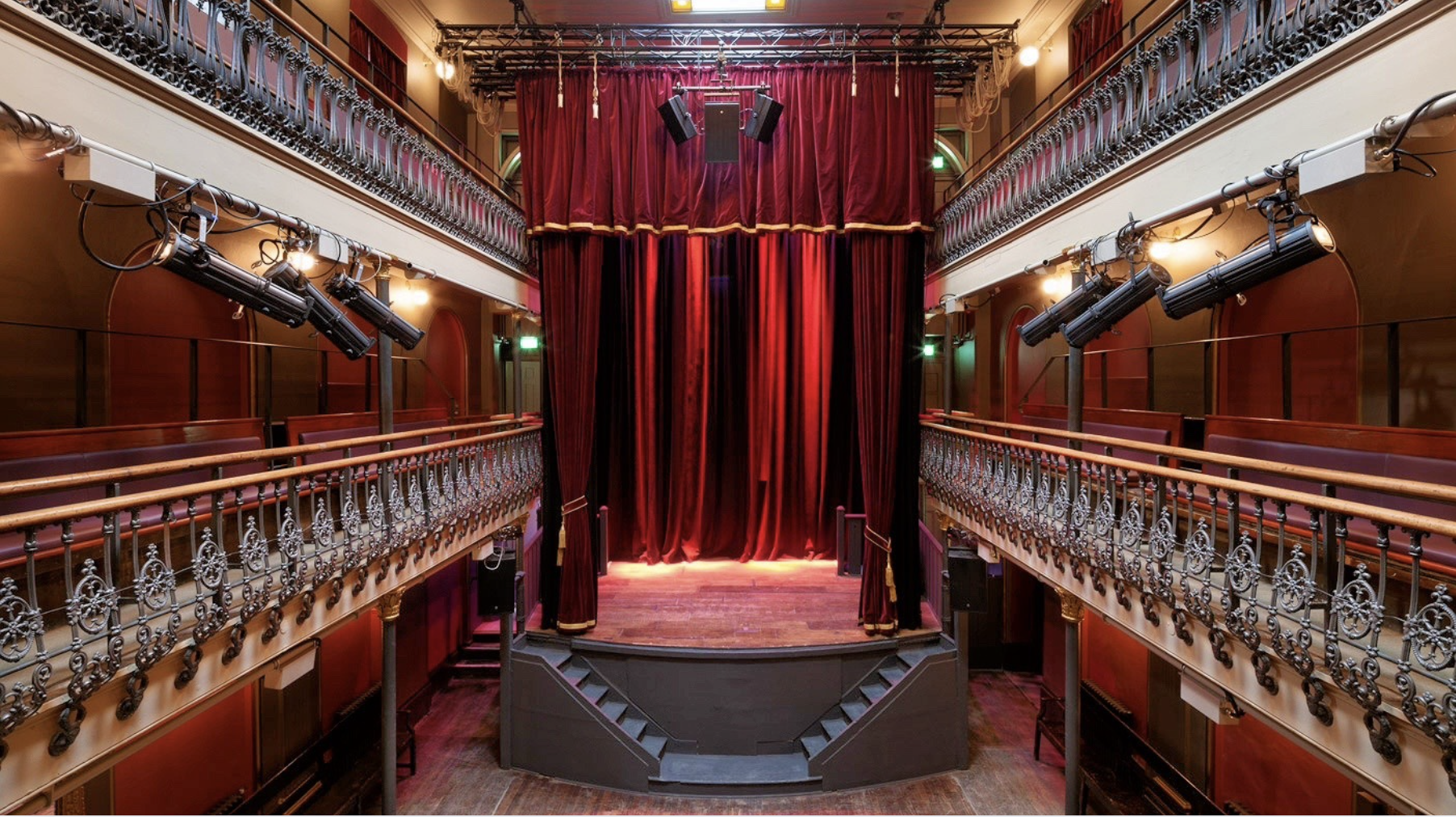
Hoxton Hall today
‘Hoxton Hall: The History of an East End Music Hall’, edited by professors Nicholas Till and Nadia Valman, follows the venue’s journey – from Victorian music hall and women’s hub, to a mission society promoting sobriety and a community arts centre today.
The beautiful Grade II*listed Hoxton Hall has had an ‘unbroken existence’ as an entertainment and community venue since it opened in 1863.
As the authors state: “For 160 years the Hall has served as a social resource for the mainly working class residents of one of the poorest areas of London.
“A history of a building like Hoxton Hall is inevitably a history of the people who have worked there, and those who have used it, in its many manifestations.”
Today, the intimate 227-seat theatre is one of only five surviving salon-style music halls left in the UK. The venue puts on a number of shows with the community at its forefront.
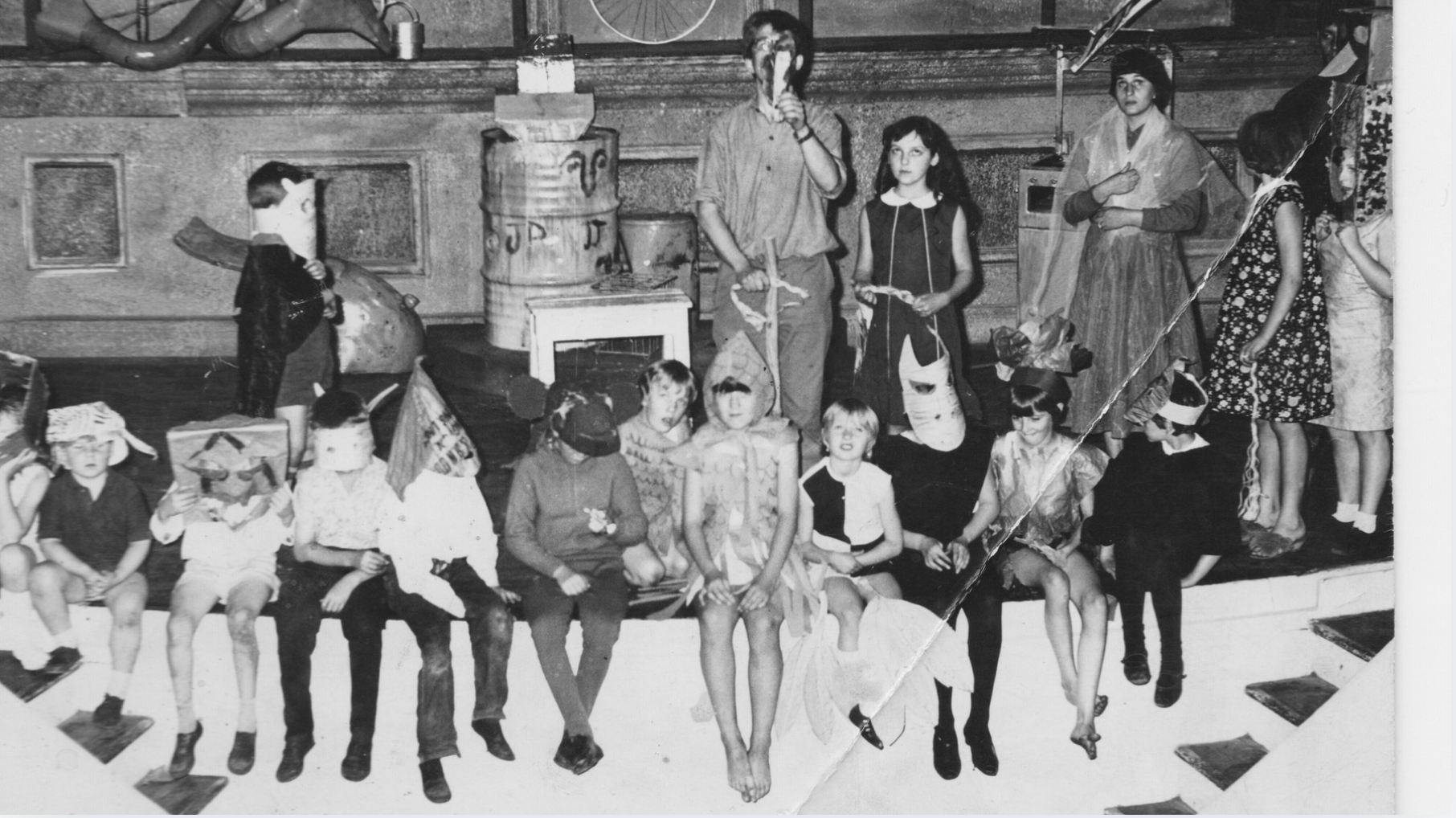
A photo from Hoxton Hall’s 1960s youth theatre group
1863: Mortimer Hall
The hall was built in 1863 by philanthropist James Mortimer and originally named after him. It was built in the traditional music hall architecture style, in the shape of a horseshoe.
The theatre was designed so that people could consume food and alcohol in the auditorium while the entertainment took place. Unlike the bawdy gin palaces, the hall was intended to offer the working classes ‘instruction with amusement’.
1866: McDonald’s Music Hall
The hall was bought by James McDonald in 1866, and renamed McDonald’s Music Hall, where it continued to be an affordable venue to entertain the working classes.
It was so popular that in 1867 James raised the height of the hall and added a new upper balcony. However, after the police raised complaints, the venue lost its music and dancing licence in 1871.
1878: Girls Guild For Good Life
From 1878 Hoxton Hall was home to the Girls Guild for Good Life. The club ran for years and had an impact on the lives of local women.
These clubs were largely intended for working girls to steer them away from ‘undesirable’ pastimes such as drinking and gambling.
Classes such as cookery, dressmaking and elocution were on offer with a view to make them ‘good wives for working men’.
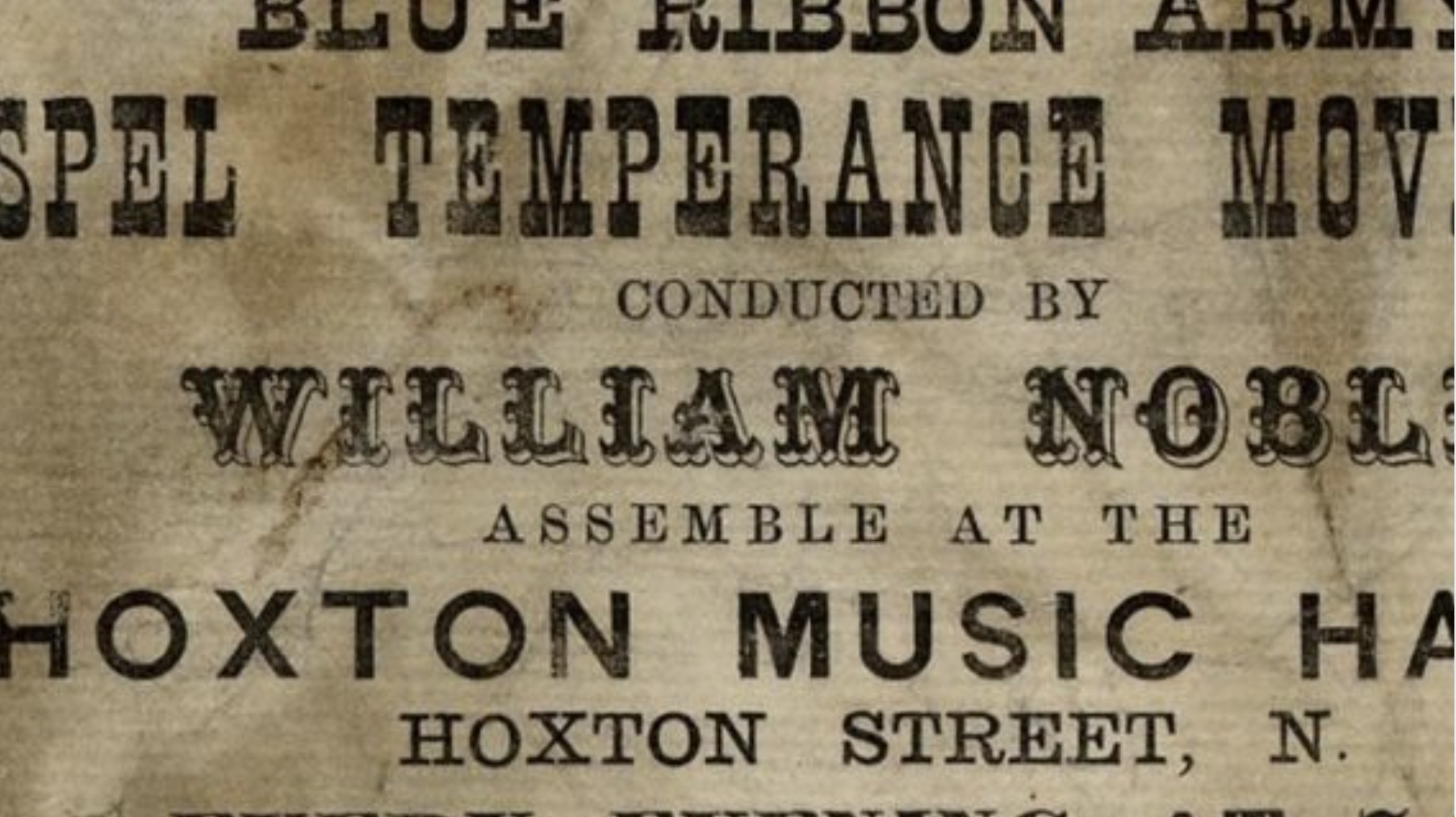
Part of The Blue Ribbon Gospel Temperance Mission leaflet
1879-93: The Blue Ribbon Gospel Temperance Mission Society
The Blue Ribbon Gospel Temperance Mission moved into Hoxton Hall and managed the property between 1879 and 1893. It was an international movement that promoted sobriety.
During its time at the hall, the society programmed meetings, special events and talks, and reached out to local people through social work and community engagement.
1939-45: The war years
During wartime, community stalwart May Scott joined Hoxton Hall, where she put on activities for local people.
The hall offered people a ‘warm and cheerful home’ and the basement was turned into a public air raid shelter.
Until May’s retirement, in 1974, she worked towards the upkeep of the hall, providing support, activities and a meeting space for residents.
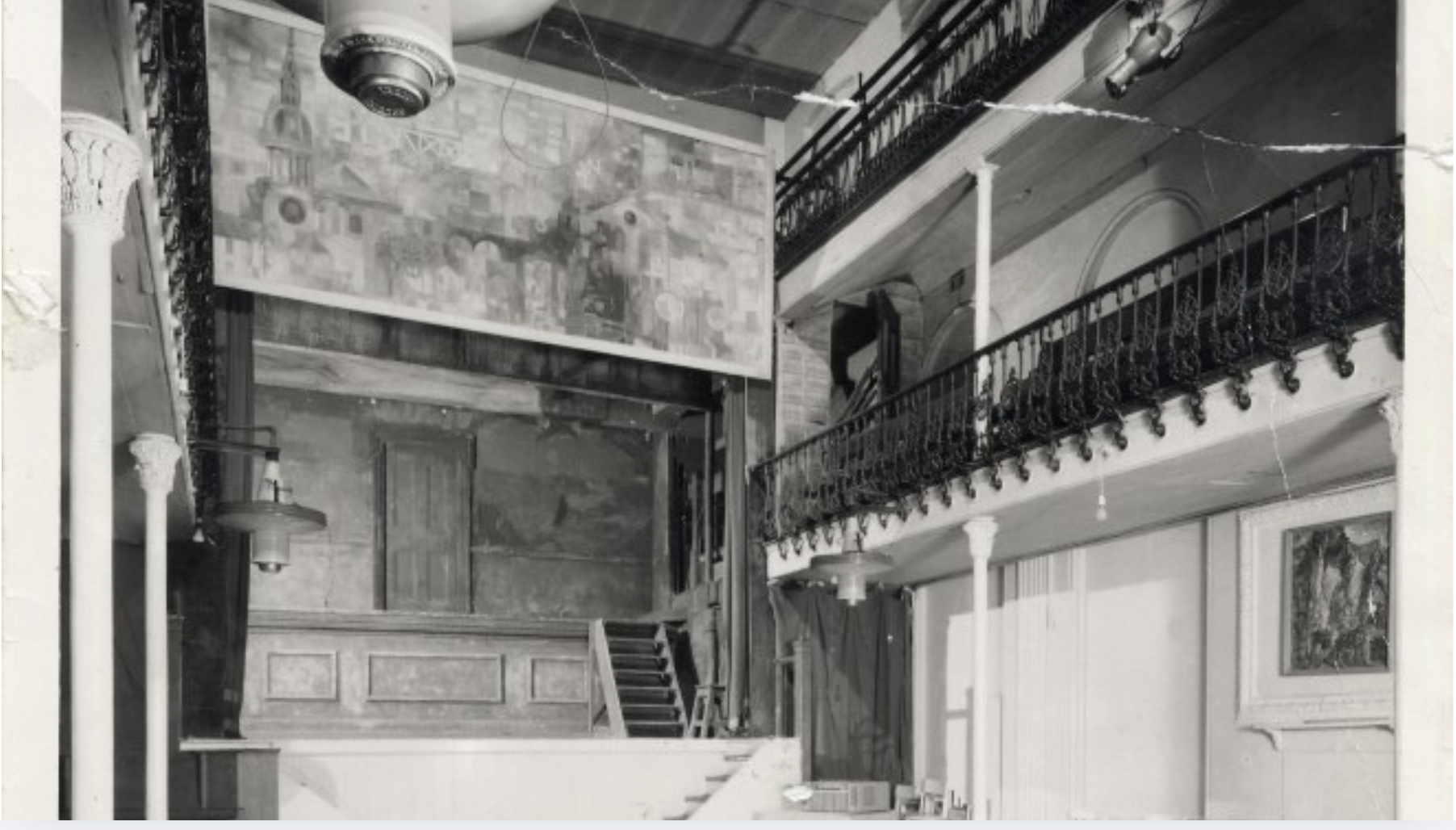
Inside Hoxton Hall in the mid-20th century
1950s-present day: Community arts
The hall transitioned from a religious mission to a community arts and education centre.
Despite facing threats of demolition and chronic neglect, a series of major renovations – most notably between 2013 and 2015 – restored the auditorium to its former glory.
Today its varied programme of professional shows, dance, comedy, music, children’s performances and the panto – alongside its youth arts work and heritage events – are testament to the rich and varied past of Hoxton Hall.