
2025 saw the 40th anniversary of the unveiling of the iconic Hackney Peace Mural
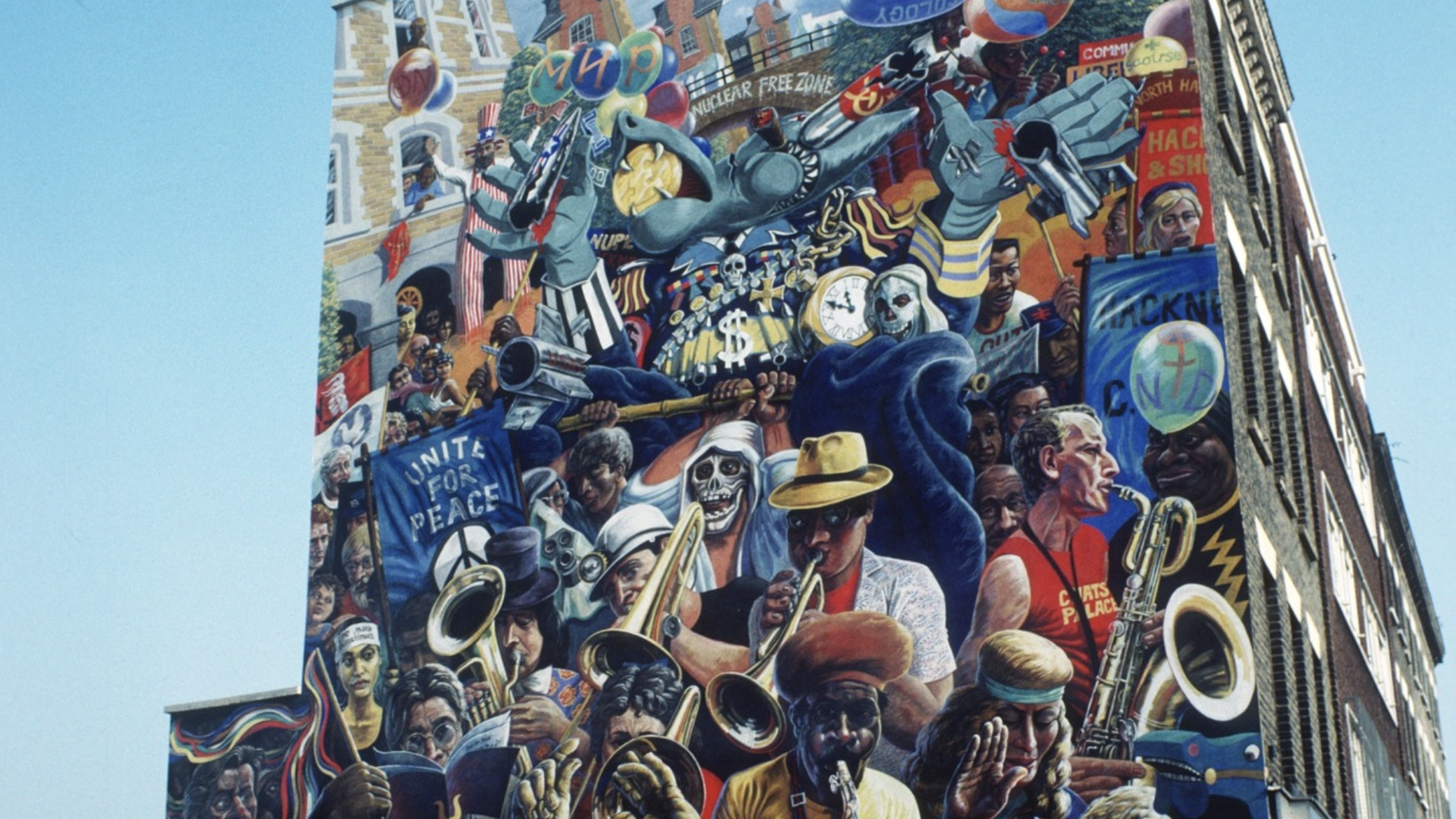
Hackney Peace mural, 1985
The mural was officially opened to view on 19 October 1985. In September 2025, communities involved in its development came together to celebrate with music and speeches from those who painted, were featured in and commissioned the public art.
The story of the mural involves three key players: Hackney Peace Carnival, mural artist Ray Walker and the Greater London Council (GLC) – which commissioned it to mark its Year of Peace, 1983.
The mural represents Hackney’s communities campaigning for peace and celebrating the borough’s diversity and creativity.
Ray extensively researched and engaged with local communities and Hackney Council over a period of 18 months prior to beginning work on the mural. Sadly, he died unexpectedly aged 39 in March 1984.
His friend, Mick Jones, and Ray’s wife, Anna Walker, took on the project as a memorial to him, returning to his extensive reference photos to complete the mural.
Ray’s final design was slightly altered with the additions of Ray (based on his self portrait), Anna and their young son Roland, as well as the miners’ strike.
Ray Walker (1945-1984) studied art at Liverpool Art School and the Royal College Art, graduating in 1969.
A move to Poplar, east London, was to influence Ray’s socialist values and his love of mural work as a form of accessible public art that could communicated the experiences of those that lived close by.
This led to several murals in Tower Hamlets, incorporating themes of community, poverty, racial inequality and trauma, featuring working class uprisings such as Peasants Revolt and the ‘Battle of Cable Street’ (1983) depicting resistance against fascists in 1936, where many of Hackney’s Jewish and anti-racists communities attended.
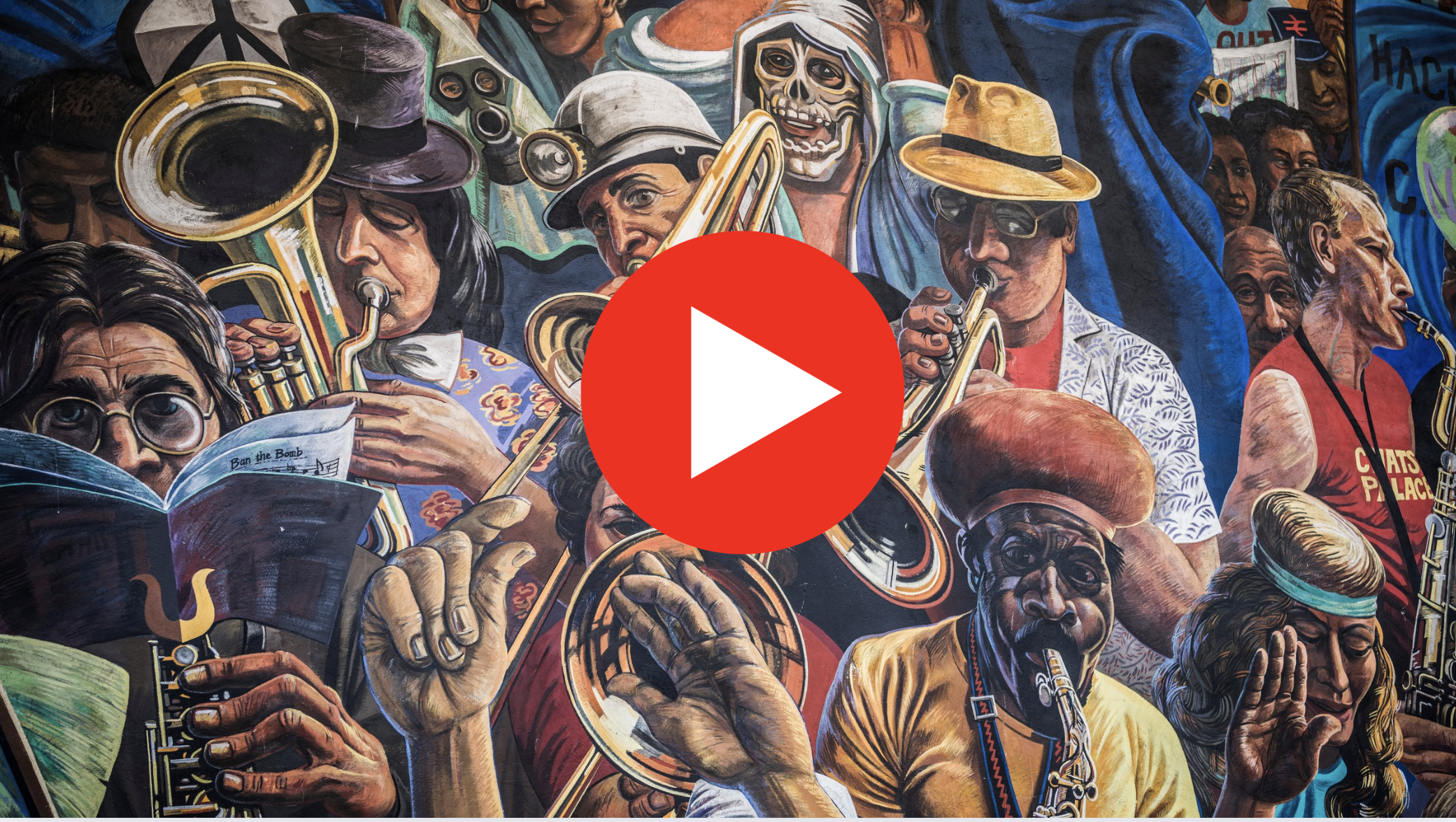
Watch a reel about the Hackney Peace Mural turning 40
In 1981, Labour took control of the Greater London Council (GLC) and from the outset took a strong anti-nuclear stance, declaring London a “nuclear-free zone”. The leader, Ken Livingstone, was nicknamed ‘Red Ken’ by The Sun newspaper due to his socialist values of equality, anti-racism and peace.
The GLC declared 1983 to be ‘Peace Year’, and redistributed its nuclear bunker budget to fund Peace Year cultural programming. This included commissioning murals via the London Muralist for Peace; one of which was to be by Ray Walker in an east London location.
Ray received £8,000 to secure a wall, and designed the mural inspired by his process of “democratic engagement”. The design was inspired by Hackney’s Peace Carnival. Hackney Council also supported the project contributing a further £5,000 and helping to secure the site at 15 Dalston Lane from British Rail in 1984.
Hackney Council commissioned the Free Form Arts Trust to curate a ‘Peace Carnival’ as part of its annual Hackney Show in 1983. The Peace Carnival paraded from Hackney Central to Hackney Downs Park and represented Hackney’s community arts ecosystem alongside the borough’s active peace movement and CND groups.

Peace Carnival float: The Final Solution:Non-returnable awaiting the parade start, 1983 [ D/F/WAL copyrighted Ray Walker Estate]
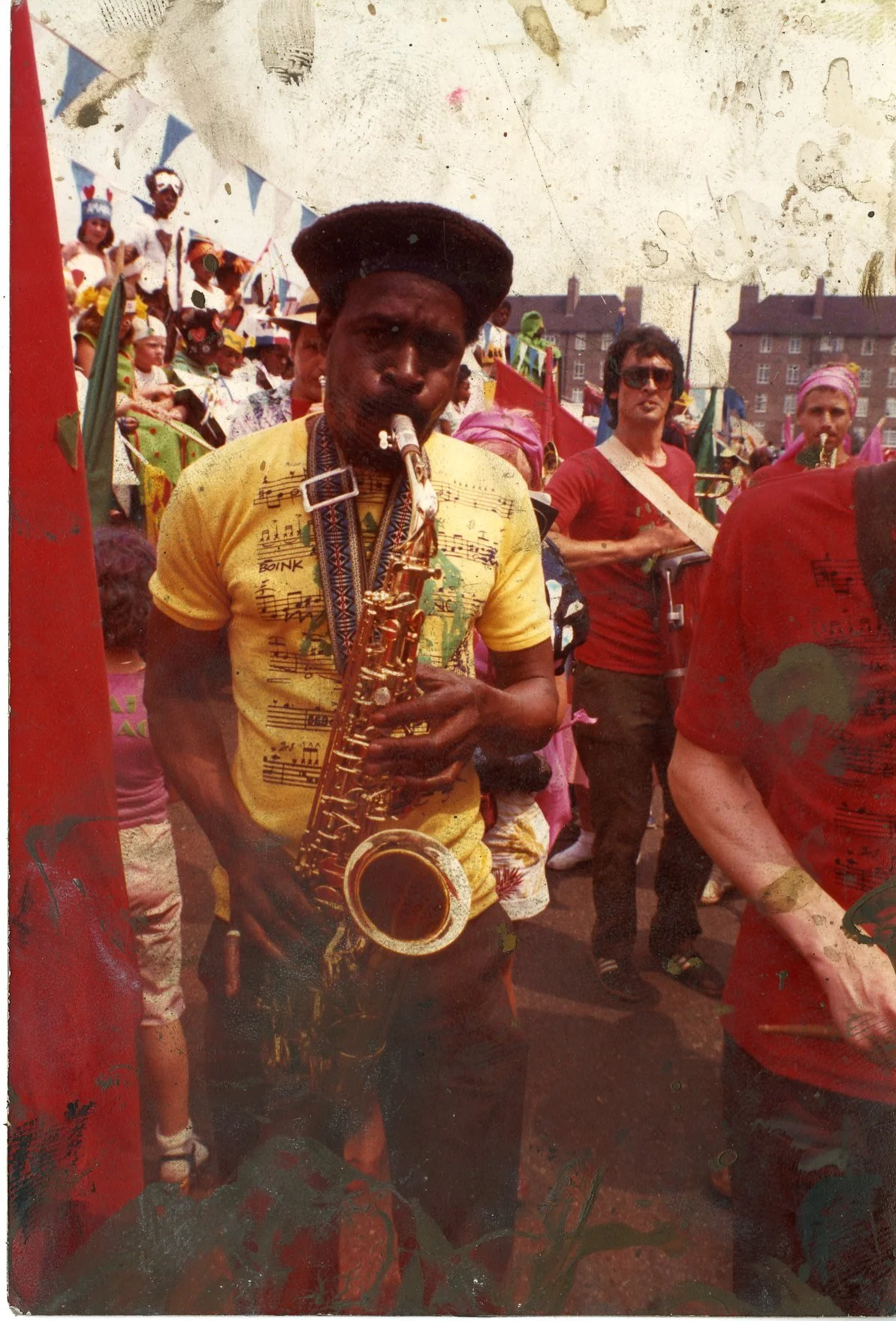
Jah Globe was a saxophonist, active at Chats Palace (and later a founder member at Pyramid Arts in Dalston). During the Peace Parade the Chats Palace Arkestral Players performed his composition ‘Jah Creation’. The paint on this photo, is from its use by the mural artist as reference image. [ D/F/WAL copyrighted Ray Walker estate]
Ray Walker, captured Hackney’s 1983 Peace Carnival is a series of photographs (now at Hackney Archives). This is the only known record of the Hackney Peace Carnival and shows the creativity developed through Free Forms Arts participatory practice with local community groups including parading paper mache nuclear warheads, flags and banners for peace, and Janus of greed representing what the makers understood to be capitalist war mongering.
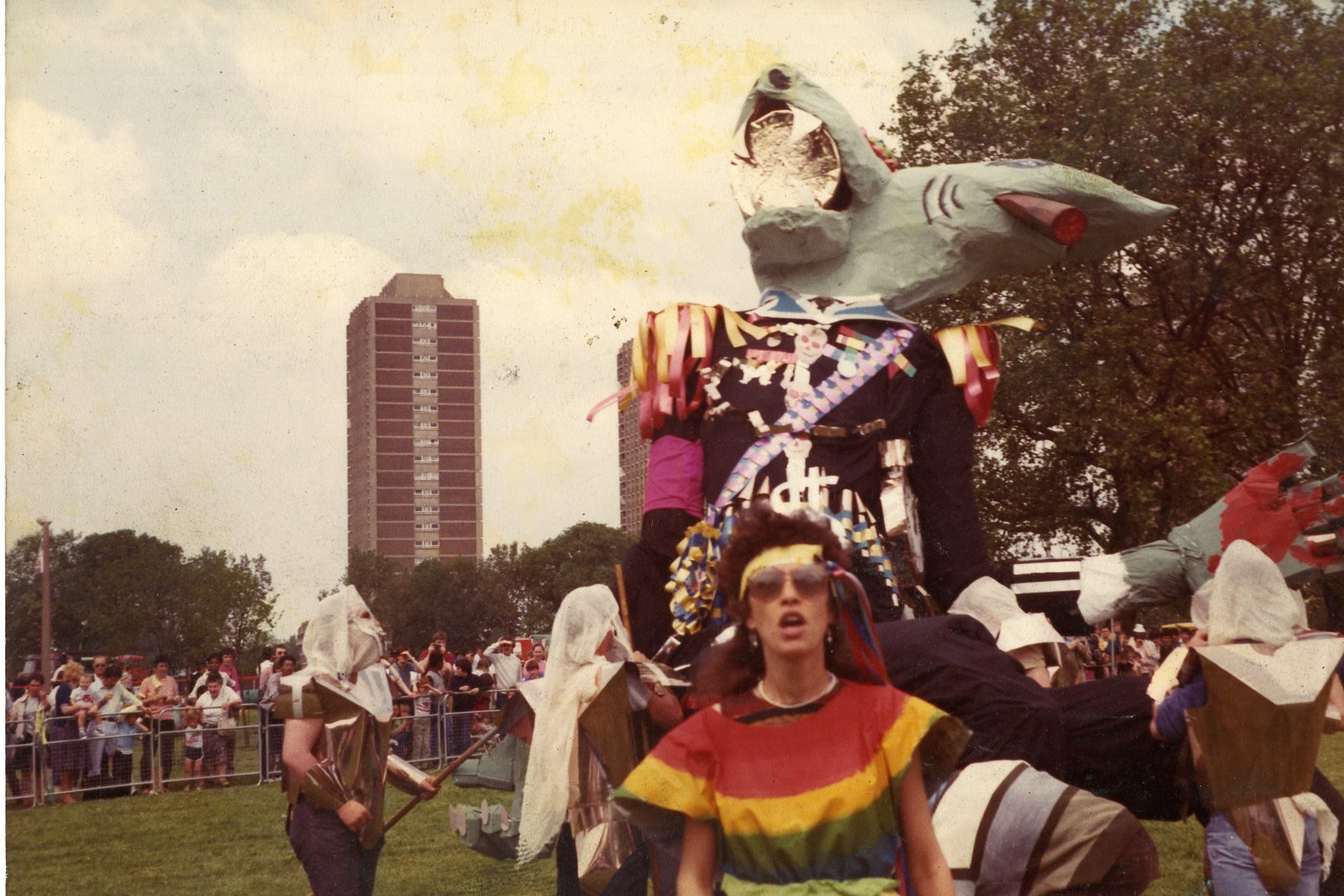
Janus of Greed in Hackney Downs Park, with the towers of the Nightingale Estate in the background. The two headed Janus of greed was to become the central character in the mural designed by Ray Walker, surrounded by resident communities of Hackney. [ D/F/WAL copyrighted Ray Walker estate]
Walker’s democratic process of engagement was deep and responsive to those communities living and working close the mural’s location in Dalston. He actively met with the Hackney Trades Council (a consortium of local trade unions); the Pan-African centre, and South Asian Community Centre, as well as responding to feedback from Hackney Council’s Planning Committee (of elected members).
This time consuming process of engagement was to ensure that the public art work he created was representative of its surrounding communities; for them to enjoy and own. The success of this masterpiece as a cultural landmark is seen through its reuse on marketing materials ranging from TFL to local businesses and most famously the album cover of Rudimental’s album: Home.
In 2014 the mural was conserved thanks to a collaboration of residents, campaigners and the Walker family to secure a copyright license payment from Rudimental. Hackney Council was an active stakeholder and investor in managing this process of conservation.