
Celebrating 40 years of the Anti Racist Year
The ‘anti-racist year’ formed Hackney’s contribution to the London Against Racism initiative 40 years ago
By Lydia Julien and Elizabeth Green, Hackney Archives
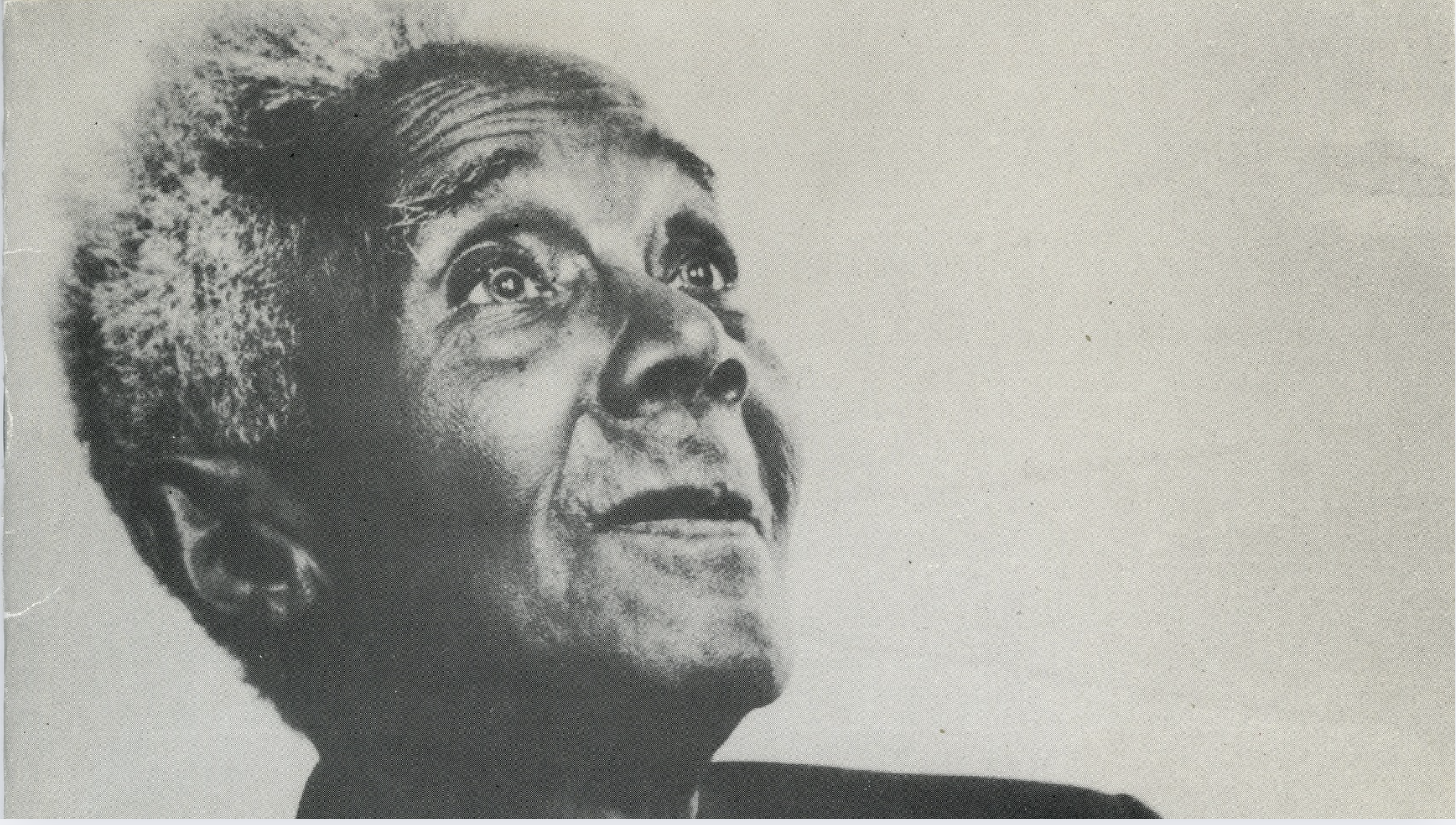
CLR James
At Hackney Black History 365, we celebrate Black history and culture throughout the entire year. Through a variety of events, learning materials, resources and practical ways to show that Hackney is a borough committed to equality and anti-racist action.
The Anti-Racist Year formed Hackney’s contribution to London Against Racism, a Greater London Council (GLC) initiative launched on 4 January 1984.
The GLC encouraged organisations and individuals across the capital to participate in a year-long programme aimed at improving race relations.
Council minutes are a treasure trove of information and are highly credible primary sources for historians or anyone documenting local governance.
The official record of local government decision-making, capturing the debates, votes, and reasoning behind policies and initiatives.
Rich in detail, in Hackney, they document the steps toward racial equality and reveal unexpected insights, like local reactions to national issues.
Council minutes in 1984 show that the slogan ‘Hackney Committed to Racial Equality and Justice’ was to appear on all Council mail during the year. A banner with the same message was unveiled at the campaign’s launch on 27 April of the same year.
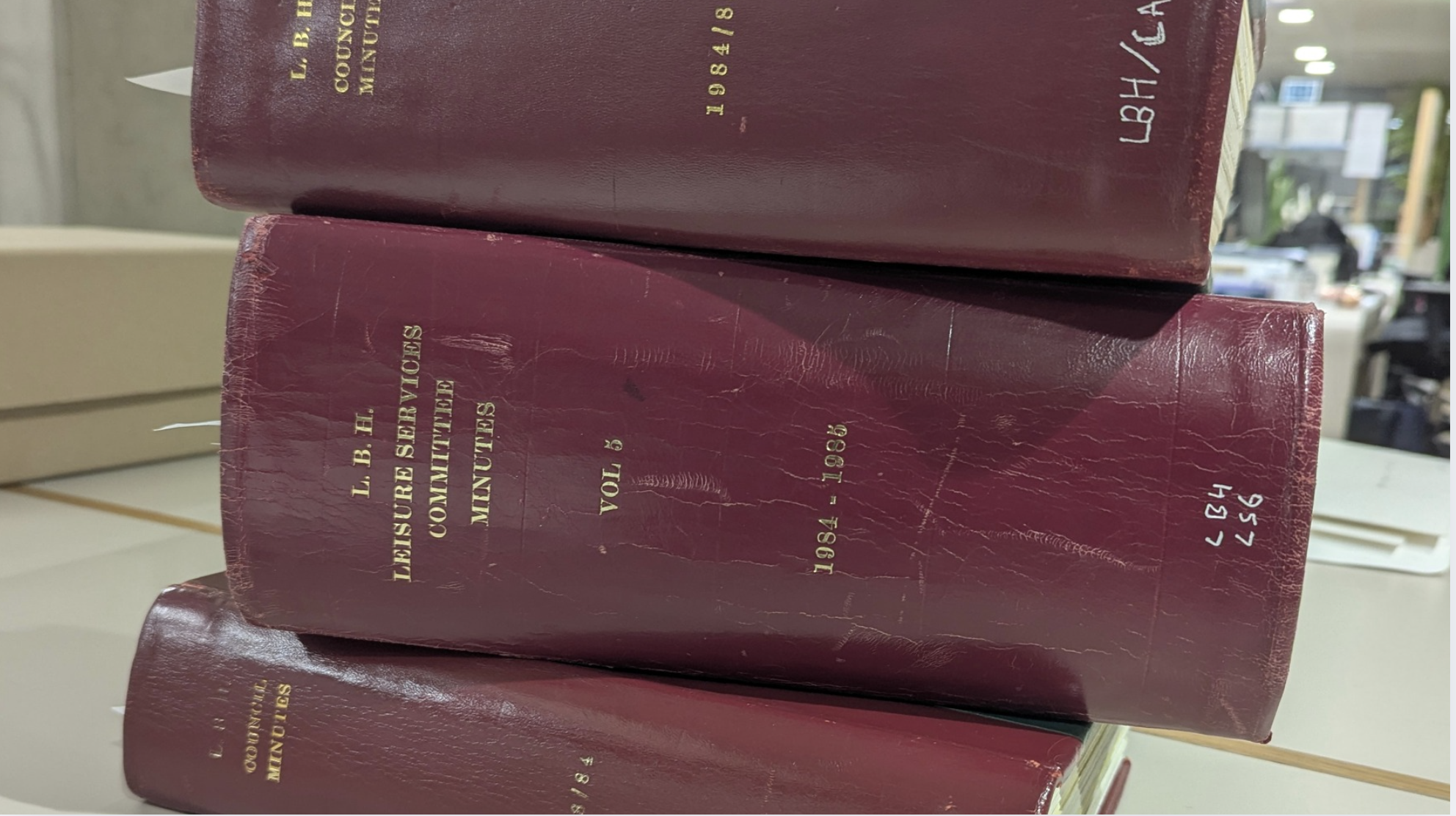
Hackney Council's minutes from 1984-1988
This was historically important because it brought institutional recognition to racism in London through a major local government body.
In funding both policy work and community arts, the campaign left a tangible legacy in how London’s institutions thought about race and equity.
It established practices like working groups and sub-committees that helped sustain anti-racist activism beyond just a campaign year.
One of the key initiatives in Hackney was a drive to increase the number of ethnically diverse voters in the borough.
Launched in April 1984, the campaign aimed to boost political involvement within the Black community and increase representation on the Council.
Other elements of the programme included:
adopting an Anti-Apartheid Declaration;
renaming the Council’s technical and contract services offices after Maurice Bishop (1944–1983), Prime Minister of Grenada’s People’s Revolutionary Government;
introducing ethnic monitoring within Council departments;
ensuring Hackney received appropriate government funding to support migrant and minority communities.
Earlier in the same year, the newly refurbished Morley House Estate on Cazenove Road had also been renamed Nelson Mandela House in honour of the imprisoned South African anti-apartheid leader.
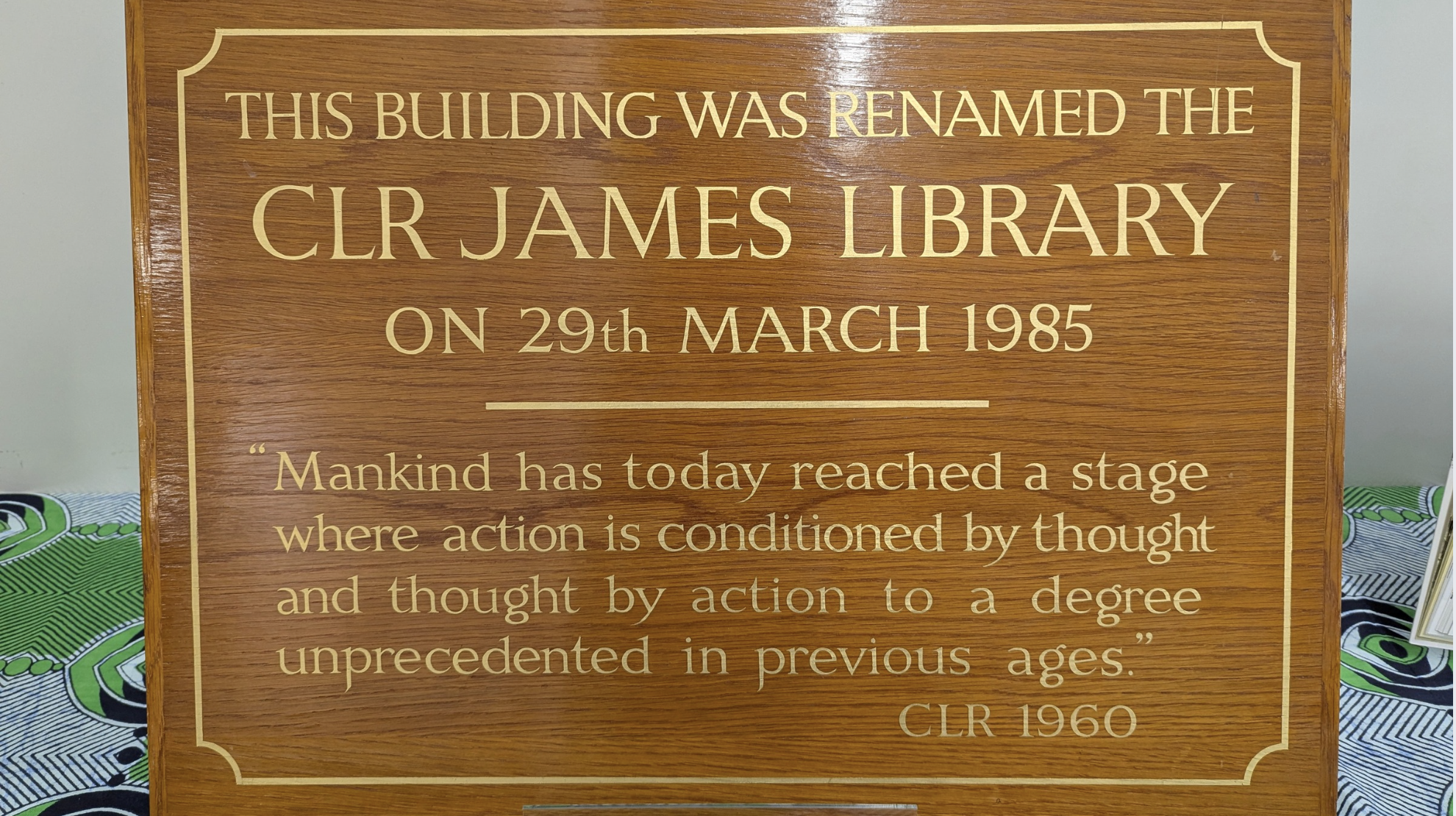
Dalston CLR James Library plaque
Local newspapers held at Hackney Archives recorded launch events, public meetings, and cultural programs, providing details that weren't always in formal council records. Hackney Gazette, Hackney People’s Press, and the Council-owned Hackney Herald – covered these events extensively.
The Herald’s spring 1984 issue included an in-depth interview with Dan Thea, Principal Race Relations Adviser and head of the newly formed Race Relations Unit.
Reflecting on the aims of Anti-Racist Year, Thea said: “A historic period has arrived when the victims of racial discrimination, and their supporters, are able to fight for their rights more effectively and successfully.
“The old order cannot remain. It will not be tolerated, and it is not strong enough to impose its will.”
In 1985, to mark the renaming of Dalston Library after the writer, historian, and socialist CLR James the Council produced a booklet named, ‘CLR James The Black Jacobin’.
In the booklet Anthony Kendall, Chair of Leisure Services, wrote: “We are proud and honoured that CLR James has agreed to lend his name to a Hackney library.
“In recent years we have worked to ensure our services serve all the people of Hackney. Progress towards full racial equality will only take place if we remain vigilant and strong.”
The renaming of the library was the culmination of the Council’s Anti-Racist Year campaign in 1984-85.
A week-long programme celebrating the renaming of Dalston Library took place from 25 to 29 March 1985.
Luminaries such as Darcus Howe, Eric Huntley and Linton Kwesi Johnson spoke on the life and works of CLR James.
The programme featured high-profile speakers who explored the contributions of Black women in writing, music, and theatre, celebrating creativity and cultural achievement. Alongside these events, there was a dedicated schools educational programme,
That same year, Black History Month was launched in Britain and has been celebrated annually ever since.